
Can a Warped Cylinder Head Be Repaired?
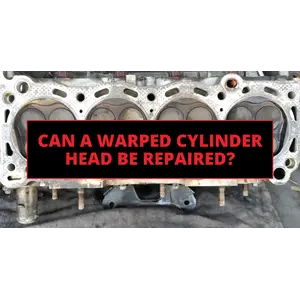

It’s one of the most common questions workshops ask after an overheating event:
“Is this head salvageable -— or is it scrap?”
The honest answer is sometimes yes, sometimes absolutely not. And guessing wrong can cost you another head gasket (or worse).
Let’s break it down properly.
What Causes a Cylinder Head to Warp?
A cylinder head usually warps because of:
-
Overheating
-
Coolant loss
-
Head gasket failure
-
Poor torque procedure
-
Uneven clamping force
Aluminium heads (which most modern engines use) are especially prone to distortion when exposed to excessive heat. Once the head expands beyond its design tolerance, it may not return perfectly flat.
And with modern Multi-Layer Steel (MLS) head gaskets, surface flatness is far less forgiving than it used to be with older composite gaskets.
How Do You Check If a Cylinder Head Is Warped?
The correct method is simple:
-
Clean the surface properly
-
Use a precision straight edge
-
Measure across multiple planes (lengthwise, crosswise, diagonally)
-
Use feeler gauges to check deviation
Most manufacturers specify a maximum allowable warp - often around 0.05mm–0.10mm depending on engine design.
If it exceeds spec, action is required.
Can It Be Machined Flat?
Yes - If It’s Within Limits
A warped cylinder head can be resurfaced (machined) if:
-
The distortion is within machinable limits
-
The head has sufficient thickness remaining
-
There are no cracks
-
The cam tunnels are still aligned
-
Valve seat integrity isn’t compromised
A light skim restores surface flatness and allows proper gasket sealing.
No - If It’s Beyond Spec
You should NOT machine a head if:
-
It has already been machined multiple times
-
It exceeds maximum material removal limits
-
Camshaft alignment will be affected
-
Valve timing geometry will change
-
Cracks are present (especially between valves or into water jackets)
Removing too much material can:
-
Increase compression ratio unintentionally
-
Alter timing chain/belt geometry
-
Cause valve-to-piston clearance issues
-
Lead to repeat head gasket failure
At that point, replacement is the smarter - and cheaper long-term - option.
The Hidden Risk: It’s Not Just About Flatness
This is where many people go wrong.
A head can measure “flat enough” but still be compromised if:
-
It has softened from overheating
-
The camshaft journals are distorted
-
Valve seats have moved
-
The alloy has lost structural strength
In wet belt engines or high-compression diesel applications, tolerances are tight. A marginal head can fail quickly under load.
Repair vs Replace: How to Decide
Here’s a practical way to look at it:
| Situation | Best Option |
|---|---|
| Minor warp, within spec | Machine & pressure test |
| Repeated overheating | Replace |
| Visible cracks | Replace |
| High-performance or diesel build | Replace (safer option) |
| Head already skimmed previously | Often replace |
If you’re already investing in a full rebuild, gambling on a questionable head rarely makes sense.
Why Modern Engines Are Less Forgiving
Older composite gaskets masked small surface imperfections.
Modern engines using MLS gaskets demand:
-
Perfect surface finish
-
Correct RA (surface roughness average)
-
Precise torque procedure
-
Flat block deck and head
If either surface isn’t correct, sealing failure is likely.
When Replacement Makes More Sense
In many cases, especially with:
-
Known-problem engines
-
Wet belt timing failures
-
Head gasket-related overheating
-
Diesel applications with high cylinder pressures
… replacing the cylinder head with a new assembled unit provides:
-
Fresh valve train components
-
Correct surface finish
-
No prior heat damage
-
Reliable long-term sealing
For workshops, this often saves comeback labour - which is where the real cost lies.
So Can a Warped Cylinder Head Be Repaired?
Yes, a warped cylinder head can be repaired, but only if:
-
It’s within machining limits
-
It passes crack testing
-
It hasn’t lost structural integrity
Otherwise, replacement is the safer and more economical solution in the long run.
If you’re unsure, measure it properly, check manufacturer specs and weigh the labour risk carefully.
Because doing the job twice costs more than doing it right once.